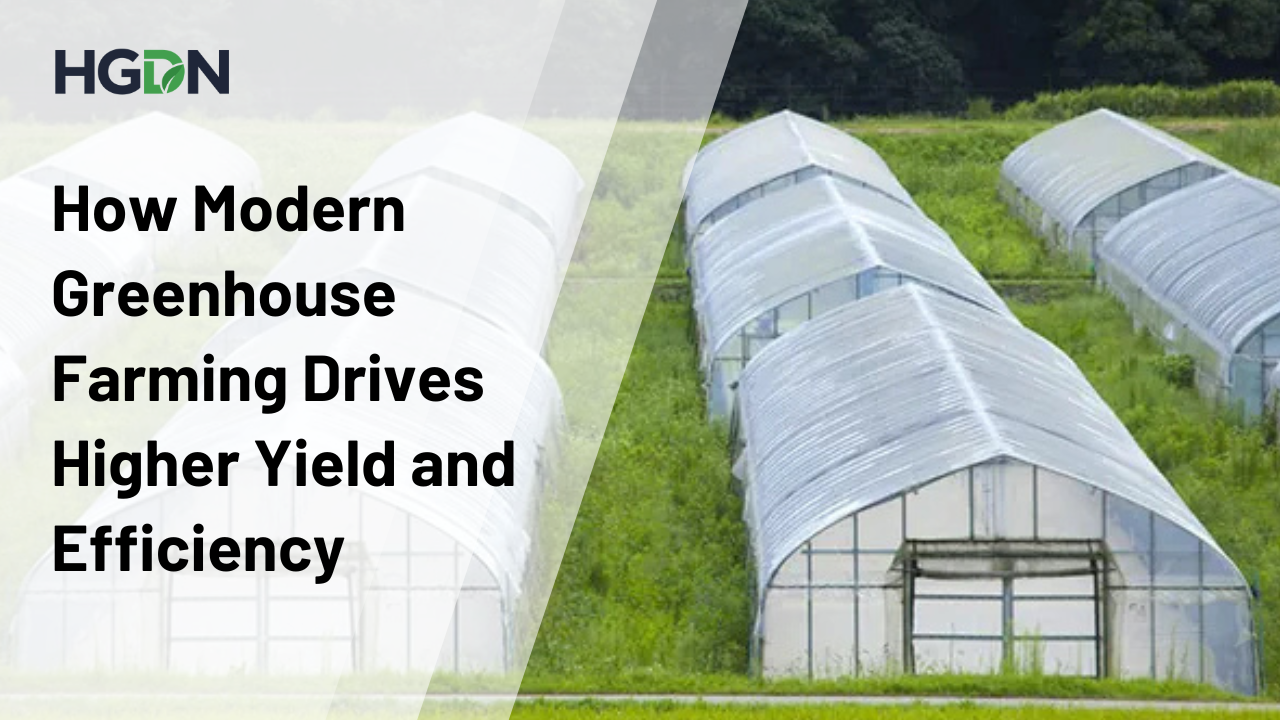
Greenhouse farming is no longer just about protecting crops from bad weather. With controlled environments, smart irrigation, climate systems, and data-driven crop management, modern greenhouses help growers produce more with less land, water, and labor. For farms facing rising costs, unstable weather, and growing food demand, this shift is becoming essential, often boosting overall crop yields by 30% to over 300% compared to traditional open-field farming.
But how exactly does modern greenhouse farming improve yield and efficiency? Let’s look at the technologies and practices behind its growing impact.
Core Principle: Yield and Efficiency Depend on Integrated Systems
Greenhouse Farming as a Connected Production System
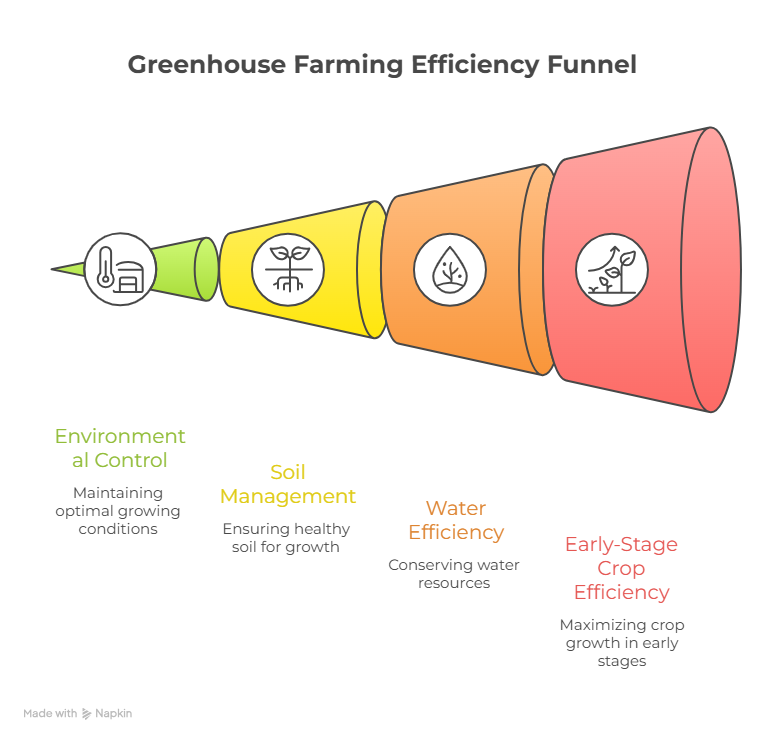
Modern greenhouse farming functions as a connected production system rather than a set of separate tools. Each physical component affects the performance of the others, from the shelter structure to irrigation, soil management, and crop handling.
A stable greenhouse environment must work together with precise water delivery and well-managed growing media to reduce waste and support uniform plant growth. When these elements are integrated, inputs can move smoothly from propagation to final harvest, helping growers maintain consistency, efficiency, and higher overall productivity.
Key Performance Drivers in Greenhouse Agriculture
To achieve peak performance, commercial growers focus on several environmental variables:
- Climate stability:Maintaining optimal temperature, humidity, and light levels inside the greenhouse structure to prevent up to 30% light transmission loss caused by condensation.
- Water efficiency: Delivering water and nutrients directly to the root zone to prevent waste and reduce water loss by up to 50%.
- Soil environment control:Regulating ground temperature while suppressing weed growth by up to 90%.
- Propagation quality:Starting with uniform, strong seedlings to ensure germination rates above 95% and high survival rates after transplanting.
Environmental Control Foundation in Greenhouse Farming
Role of Greenhouse Film and Covering Systems
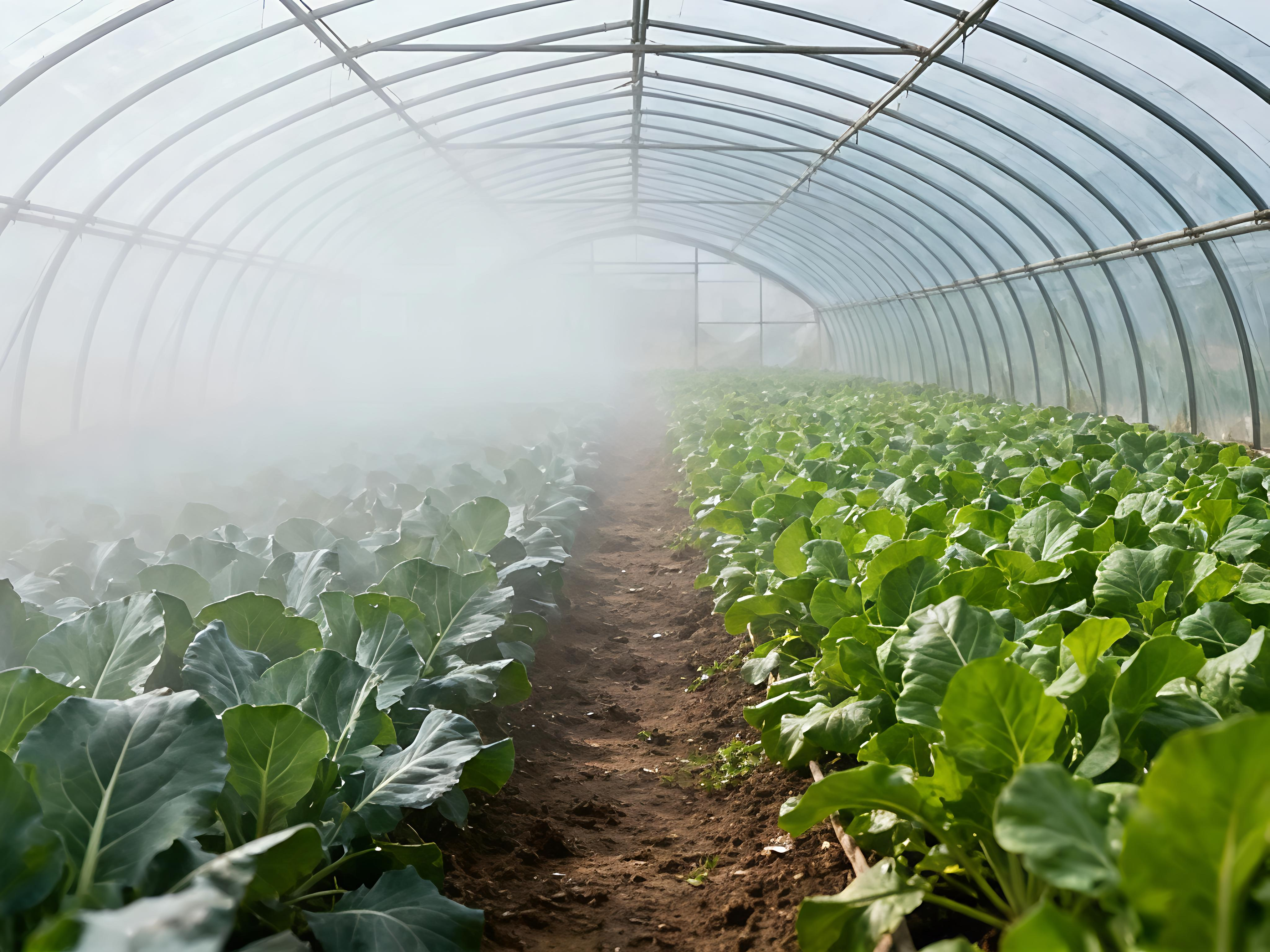
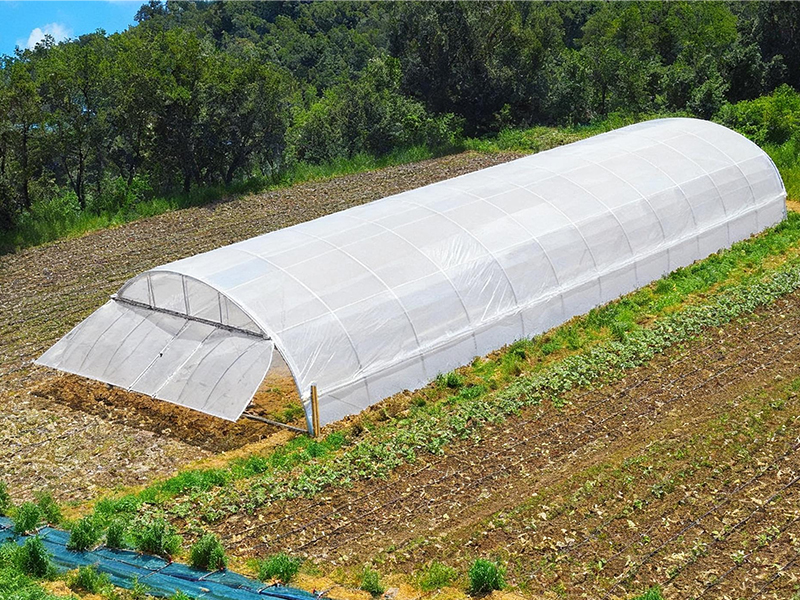
The protective envelope of a greenhouse acts as the primary shield against unpredictable weather. Specially engineered greenhouse film plays a central role in optimizing solar radiation and managing thermal energy.
- It filters solar radiation to maximize photosynthesis while preventing leaf scorch.
- It retains thermal energy during cold nights, keeping inside temperatures 2°C to 4°C warmer and reducing heating utility costs.
- Specialized additives prevent condensation dripping, which minimizes the spread of fungal diseases and recovers 15% to 30% of light transmission otherwise lost to droplet buildup.
- Highly durable multi-layer co-extrusion materials provide long-term resistance to ultraviolet degradation.
Climate Stability as a Yield Driver
A stable microclimate eliminates the biological stress that extreme temperature swings place on crops. This constant environment allows plants to focus energy on foliage and fruit development, resulting in a 20% to 30% faster crop development cycle.
Soil Management and Water Efficiency Systems
Soil Protection and Moisture Retention Strategy
Achieving high yields requires maintaining physical stability at the root level.
- Applying agricultural mulch filmover planting beds stabilizes soil temperatures during temperature fluctuations.
- This protective layer prevents valuable moisture from evaporating into the air, reducing soil evaporation rates by up to 50%.
- Black or silver-black films block sunlight from reaching the soil surface to suppress weed germination naturally by up to 90%.
- Reducing weed competition preserves crucial nutrients for the primary crop.
Precision Irrigation for Resource Optimization
Transitioning from traditional overhead watering to targeted delivery systems is vital for sustainable crop management.
- High-quality drip irrigation tapedelivers water and soluble nutrients directly to plant roots.
- This localized application reduces water consumption by 30% to 50% by avoiding evaporation and runoff.
- Keeping foliage dry discourages the development of crop diseases.
- Precise moisture delivery encourages deep, healthy root systems.
Seedling Production and Early-Stage Crop Efficiency
Importance of Uniform Germination and Early Growth
The success of any harvest is determined during the initial propagation phase. Weak or uneven seedling growth leads to high early-stage mortality rates (often up to 20%) and inconsistent plant development in the main growing area.
Nursery Systems with Seedling Trays for Commercial Farming
Modern nurseries utilize standardized cultivation tools to streamline early-stage crop growth.
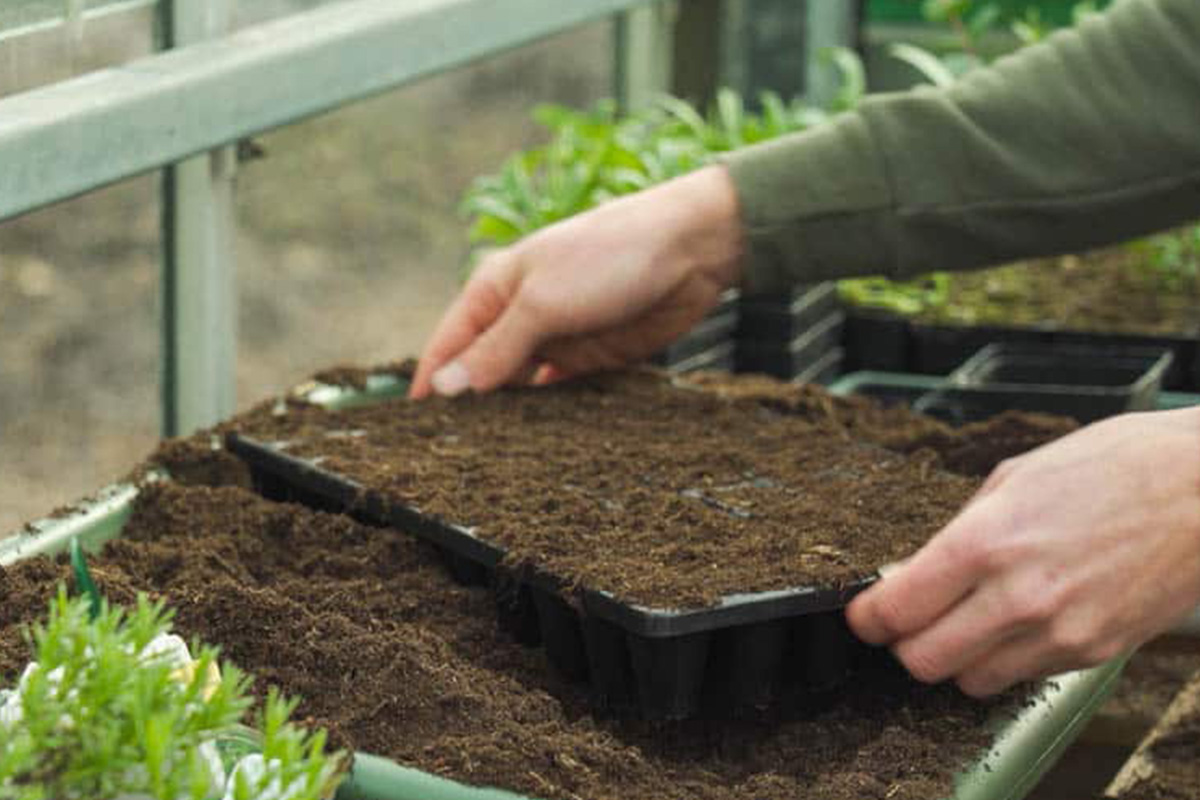
- Utilizing specialized seedling traysprovides each seed with its own designated growth cell.
- These trays prevent root entanglement, making the subsequent transplanting process stress-free for the plants.
- Robust seedling pots allow for individual root development in larger crop varieties.
- Standardized spacing in nursery trays ensures equal access to light and water, resulting in uniform plant sizing.
- These nursery solutions drastically reduce early seedling loss and lower labor costs during transplantation.
System Synergy: From Propagation to Harvest
How Different Components Work Together
A truly productive farm integrates all physical elements into a singular operational flow:
- Premium greenhouse filmcreates the perfect ambient microclimate overhead.
- Strategic mulch filmapplication secures soil moisture and temperature below.
- Target-fed drip irrigation tapeprovides consistent moisture exactly where roots need it.
- Rigid seedling systems establish strong, uniform plants ready to thrive in this optimized environment.
Why Integration Improves Yield and Efficiency
Using a unified system mitigates the operational risks of agriculture:
- It minimizes environmental variability to ensure reliable harvest schedules.
- It maximizes resource utilization by reducing water usage by up to 50% and minimizing fertilizer waste by 25%.
- It produces a predictable, high-quality output that meets strict market standards.
Conclusion
Achieving superior yield and efficiency in modern agriculture requires a holistic approach to crop management. HGDN Agro provides a comprehensive range of high-quality products designed to support commercial growers from seed to harvest. With 18 years of manufacturing expertise, the company delivers custom factory-direct solutions worldwide.
Growers can rely on HGDN Agro for:
- Multi-layer co-extrusion greenhouse filmfor premium climate control.
- Specialized mulch filmfor optimal soil protection and weed suppression.
- Durable drip irrigation tapefor precision watering.
- Standardized seedling traysand sturdy seedling pots to secure uniform crop propagation.
Investing in integrated agricultural systems is the most reliable way to secure sustainable yields and long-term farm profitability. Contact us now!
FAQ:
Q: When Should I Use Mulch Film in Greenhouse Farming?
A: Mulch film is useful when growers want to reduce soil moisture loss, control weeds, and stabilize root-zone temperature. It is commonly used for vegetables, fruits, and cash crops that need cleaner planting beds and more consistent soil conditions. Black mulch film is often selected for weed suppression, while silver-black film can also help with light reflection and pest management in some growing systems.
Q: Is Drip Irrigation Tape Suitable for All Greenhouse Crops?
A: Drip irrigation tape is suitable for many greenhouse crops, especially vegetables, fruits, flowers, and nursery crops that need precise water and nutrient delivery. However, the tape spacing, flow rate, wall thickness, and layout should match the crop row spacing, soil type, and irrigation frequency. Choosing the wrong specification may lead to uneven watering or unnecessary material waste.
Q: Can HGDN Agro Provide Customized Greenhouse Farming Solutions?
A: Yes. HGDN Agro supplies greenhouse film, mulch film, drip irrigation tape, seedling trays, and seedling pots for different crop types and farm scales. Based on climate conditions, crop requirements, and production plans, HGDN Agro can provide factory-direct product options to support greenhouse growers from propagation to harvest.