Buying agricultural film often starts with a surprisingly simple number: thickness. A supplier may quote 80, 100, 120, or 200 microns, but that figure is easy to misunderstand if you are comparing products across markets. For commercial growers, distributors, and greenhouse builders, knowing what micron means helps turn a technical specification into a practical purchasing decision.
What Does Micron Mean in Greenhouse Sheeting?
A micron, or micrometer, is one-millionth of a meter. In film specifications, it describes the thickness of the plastic sheet. One micron equals 0.001 millimeter, so 100 microns equals 0.1 millimeter. The higher the micron value, the thicker the film is.
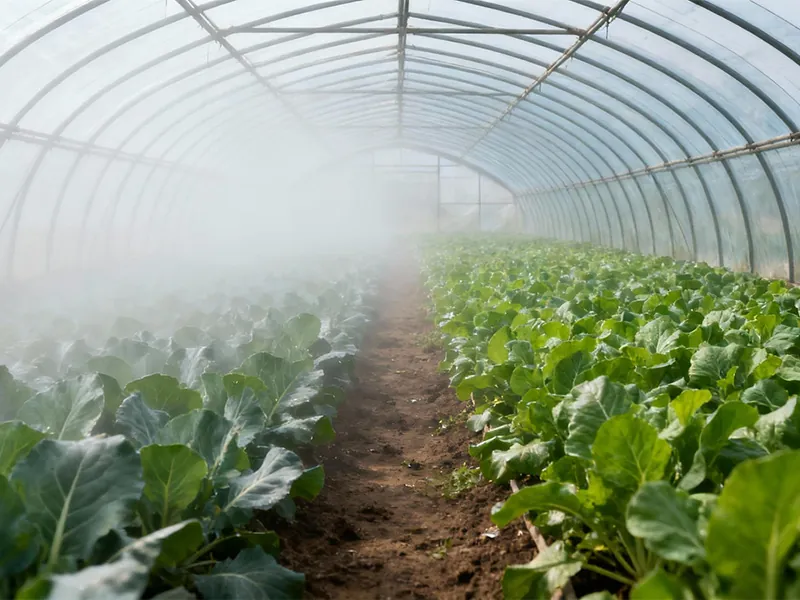
For a buyer, however, thickness should not be treated as a simple “higher is always better” measurement. Greenhouse coverings must balance durability, light transmission, handling, installation requirements, climate, and expected service life. Penn State Extension, for example, notes that many high tunnels use a single layer of six-mil greenhouse-grade polyethylene film. Six mil is approximately 152 microns.
How Does Micron Compare With Mil?
Micron and mil are two different units that frequently appear on agricultural film quotations. A mil means one-thousandth of an inch, while a micron is one-thousandth of a millimeter. They are not interchangeable numbers.
For practical purchasing, 1 mil equals approximately 25.4 microns. Therefore, a 4-mil film is about 102 microns, while a 6-mil film is about 152 microns. Buyers comparing international quotations should check the unit before assuming two thickness figures describe similar products.
Why Thickness Matters to Commercial Buyers
Thickness can influence how a film handles mechanical stress during installation and use. A thicker sheet generally contains more material, but actual performance also depends on polymer formulation, processing, additives, and film structure. That is why procurement teams should compare complete technical specifications rather than choosing by micron alone.
Climate and greenhouse design also matter. Wind exposure, snow loads, installation method, structure spacing, and expected replacement cycle can all affect the appropriate specification. A supplier should therefore recommend film based on the project rather than simply pushing the thickest available option.
Thickness also affects practical handling. Heavier film can require more attention during installation, folding, storage, and replacement. For distributors, roll dimensions and weight matter because they influence warehouse handling and freight planning. For growers, the priority is making sure the selected thickness works with the structure and installation system while meeting the intended service-life requirements.
Thickness Is Only One Part of Film Performance
A serious evaluation of greenhouse sheeting should also examine UV stabilization, light transmission, diffusion, anti-drip performance, thermal properties, tensile strength, elongation, and puncture resistance. These characteristics influence how the covering performs after installation and under changing environmental conditions.
For example, Penn State Extension identifies greenhouse-grade polyethylene as a common covering material for high tunnels and greenhouses. Greenhouse production also relies on the covering as part of a larger controlled environment, alongside ventilation, irrigation, temperature management, and other systems. The film specification therefore needs to fit the whole production setup.
How We Specify Film at HGDN
We approach thickness as one element of a complete crop-protection system. Our standard greenhouse film specifications include thickness from 80 to 200 microns, with customization available. Depending on the product, we work with LDPE and LLDPE materials.
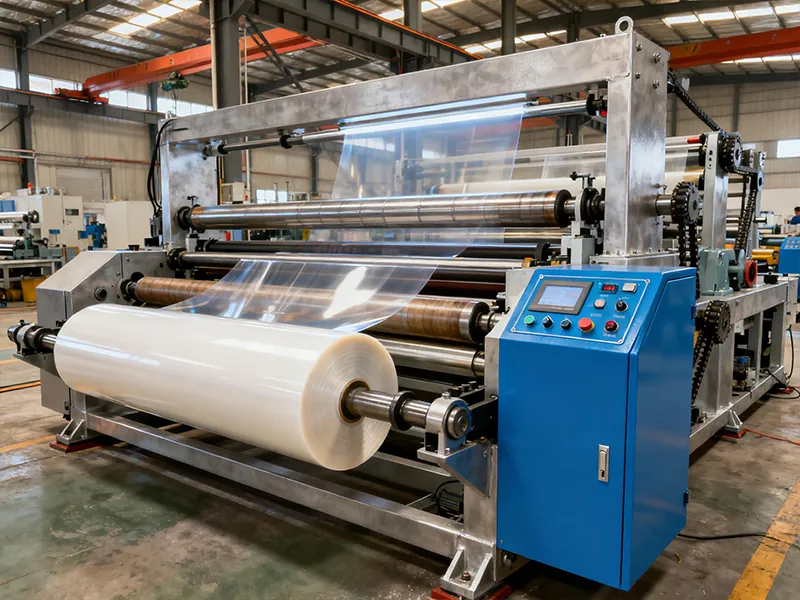
Our 5-layer co-extrusion process allows us to build different functions into the film structure. UV stabilizers and other functional additives can be incorporated according to the intended application. We also conduct batch testing for tensile strength and elongation, giving distributors and commercial growers measurable quality information to consider during procurement.
What Should Buyers Ask a Greenhouse Film Manufacturer?
When requesting quotations, buyers should ask for the actual thickness range, material composition, film width and roll length, light transmission, diffusion level, UV warranty, and applicable testing standards. Asking how thickness is controlled across the roll can also help buyers evaluate manufacturing consistency.
It is equally useful to clarify whether the quoted micron value is nominal or subject to a stated tolerance. Packaging, core dimensions, customization, private labeling, and shipping arrangements may also affect the total procurement decision. Working with an experienced greenhouse film manufacturer can make these technical and logistical details easier to coordinate.
Buyers can also ask for samples before committing to a large order, especially when appearance, flexibility, optical properties, or processing behavior are important to the application. For international procurement, consistent technical documentation can make comparisons between suppliers easier and reduce uncertainty during large-volume purchasing.
Choose Micron Based on the Whole Application
Micron is simply a measurement of film thickness, but it has real purchasing significance. The right number depends on the greenhouse structure, local climate, crop cycle, installation conditions, durability expectations, and other film properties. Buyers should compare the complete specification rather than assuming that the thickest sheet will automatically provide the best value.
With more than 18 years of experience, we support agricultural buyers with customized crop-protection solutions, including greenhouse sheeting, mulch film, seeding trays, and nursery trays. As a greenhouse film manufacturer, we at HGDN combine material selection, 5-layer co-extrusion, quality control, and customization for different commercial requirements. Our 5-stage quality-control approach supports consistent production, while our stated UV warranty options can reach 5–8 years depending on the product.