In commercial horticulture, the creation of a controlled environment is a fundamental strategy for improving crop predictability and quality. A central component of this environment is the cladding material. At HGDN, we approach greenhouse sheeting not as a simple cover, but as a functional, engineered layer that actively manages climate variables. This article explains the composition and operational mechanics of these films, detailing how they function to establish and maintain specific growing conditions essential for propagation and growth, including in areas utilizing seeding tray and nursery tray systems.
The Principle of Selective Light Transmission and Diffusion
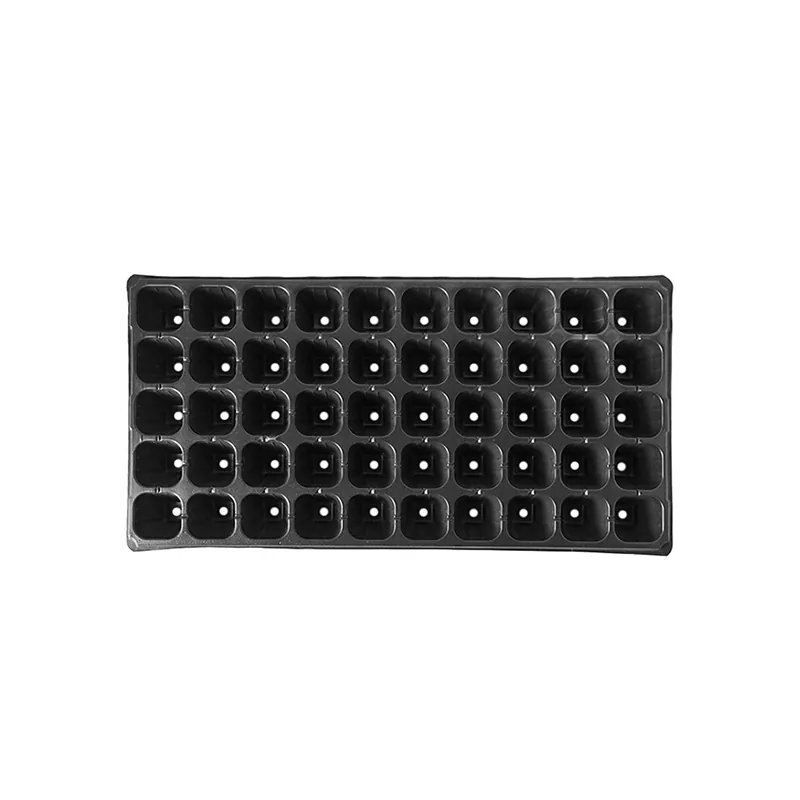
The primary function of a greenhouse sheeting product is to manage solar radiation. Unlike standard plastic, these films are formulated to control which wavelengths of light pass through. Most allow a high percentage of photosynthetically active radiation (PAR) to enter, fueling plant growth. However, they can be engineered to diffuse this light, scattering it evenly throughout the structure. This diffusion eliminates harsh shadows and reduces plant heat stress, leading to more uniform growth. For seedlings developing in a nursery tray, this even light distribution prevents elongation and legginess, promoting sturdier, more consistent plant stock from the earliest stages.
Regulating Thermal Energy for Climate Buffering
A greenhouse structure’s ability to retain heat—known as the greenhouse effect—is driven by its covering. During the day, film allows short-wave solar radiation to enter and warm surfaces inside. These surfaces then re-radiate energy as longer-wave infrared radiation. The greenhouse sheeting material is designed to be less permeable to these longer waves, trapping the heat inside. This thermal buffering protects plants from sudden external temperature drops. For operations starting plants in a seeding tray, this stable warmth is critical for reliable germination rates and steady early development, creating a predictable propagation timeline regardless of outside conditions.
Integrating Film Performance with Cultivation Infrastructure
The effectiveness of a film is realized through its interaction with internal growing systems. A film that manages condensation by channeling droplets along its surface, for instance, directly benefits plants below by reducing moisture-related disease pressure. This is particularly important over densely packed nursery tray arrays where air circulation can be limited. Furthermore, the durable, UV-stabilized nature of modern greenhouse sheeting provides a protective barrier against weather, safeguarding the investment in internal infrastructure. The consistent environment it creates ensures that plants, whether in a seeding tray on a bench or as mature crops in the soil, experience fewer abiotic stresses.
Understanding greenhouse film as a dynamic climate-management tool allows for more informed material selection. Its work in modulating light, retaining heat, and protecting the enclosed environment establishes the foundational conditions for all subsequent cultivation activities. For businesses like HGDN, the focus is on providing high-performance greenhouse sheeting engineered to perform these functions reliably. By creating a stable aerial environment, these films directly support the success of grounded processes, from the first sprouts in a seeding tray to full-scale production, forming a vital component in efficient protected agriculture.