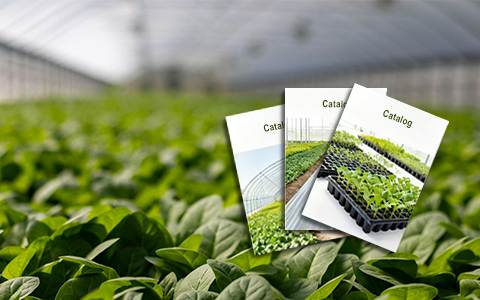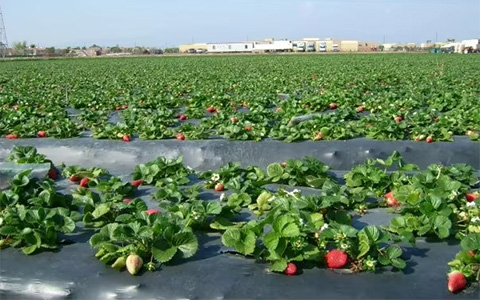
Establishing a successful crop begins with the earliest stages of plant growth, where the choice of propagation container directly impacts root development and transplant success. These initial containers, often called seedling pots or trays, are engineered to provide a controlled, supportive environment for young plants. At HGDN, we view these tools as fundamental components of a streamlined production system, working in concert with elements like greenhouse sheeting to manage the nursery microclimate. This guide examines the definition, primary categories, and practical applications of these essential products.
Defining the Modern Seedling Container
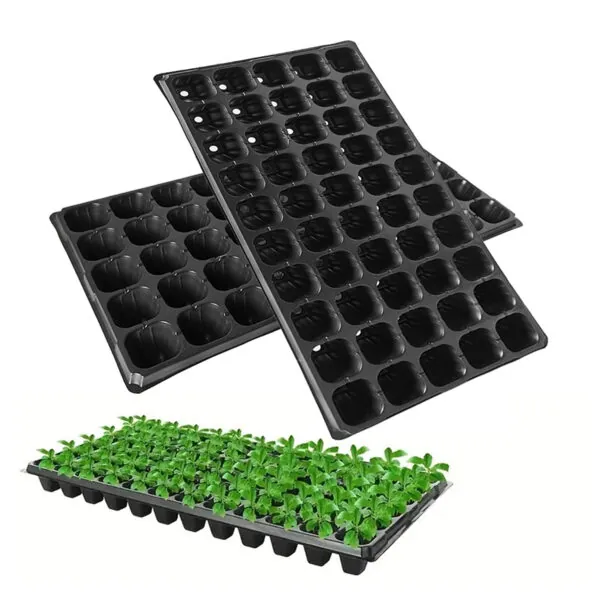
A modern seedling container is a vessel designed specifically for plant propagation, prioritizing root zone management over simple containment. Its core functions are to hold a growing substrate, facilitate efficient water drainage to prevent disease, and allow for air exchange to encourage healthy root pruning. Unlike generic pots, these are designed with plant physiology in mind. The structure of a well-designed seeding tray, for instance, includes drainage channels and cell geometry that directs root growth downward and minimizes tangling. This scientific approach to early growth sets the stage for stronger plants that can better withstand the transition to larger pots or field soil.
Functional Categories: Trays and Pots
Two main categories dominate commercial propagation: plug trays and individual pots. Plug trays, or seeding tray systems, consist of numerous small cells connected in a single sheet. They maximize space efficiency and are ideal for germinating large quantities of seeds for transplanting at a specific stage. Individual pots, often referred to as nursery tray units or propagation pots, provide more growing medium volume for species that require a longer initial growth period or have sensitive root systems. These pots are typically used for cuttings or seeds that will develop into larger seedlings before transplanting. Selecting between a multi-celled tray and a singular pot depends on the crop’s growth habit, production timeline, and desired root ball structure.
Integration into Production Systems
The use of specialized seedling containers extends beyond mere convenience; it is a strategic decision that affects entire workflow and plant health. A uniform nursery tray system allows for efficient automated handling, watering, and movement within a propagation area. The consistency in root ball shape and size reduces transplant shock, leading to more uniform field stands. Furthermore, the microclimate under greenhouse sheeting is more easily managed when the plants below are grown in containers with predictable watering needs and excellent drainage. This integration is critical—the right container supports the environmental control provided by the greenhouse sheeting, creating a stable, optimized start for young plants.
Selecting the appropriate seedling container is a precise decision that influences plant vitality, operational efficiency, and final crop uniformity. From high-density plug trays for uniform germination to individual pots for delicate perennials, each type serves a distinct purpose in a commercial nursery workflow. At HGDN, we supply containers engineered for these roles, focusing on the drainage, aeration, and durability that professional growers require. By understanding the definition, types, and systemic uses of these pots and trays, growers can establish a more robust and reliable foundation for their production cycle.