Commercial farming requires active management of environmental variables to protect yield and resource investment. In this context, specialized polyethylene films function as critical tools, not simple commodities. We at HGDN operate as both agricultural film manufacturers and a dedicated greenhouse film supplier, focused on how these materials deliver functional answers to persistent field and greenhouse challenges. This analysis identifies six common operational problems where the application of specialized film, including agricultural mulch film, provides a direct and measurable solution.

Stabilizing Early Season Soil Temperature
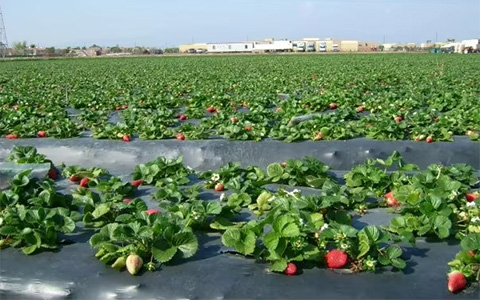
Crop establishment faces risk from unseasonably cold soil, which delays germination and stunts early growth. Film technology addresses this directly. By applying a layer of agricultural mulch film, the soil’s thermal profile is altered. The material absorbs solar energy, transferring heat to the soil beneath. This creates a warmer, more consistent root zone environment, allowing for earlier planting and more predictable seedling emergence, a foundational step for the entire season’s crop cycle.
Reducing Water Loss from Evaporation
Efficient water use is a constant priority. Exposed soil loses significant moisture to evaporation, wasting irrigation inputs and increasing operational costs. The use of an impermeable film acts as a physical vapor barrier. By covering the soil surface, this barrier drastically curtails evaporative loss, retaining applied water in the root zone for longer periods. This leads to a direct reduction in irrigation frequency and volume, improving a farm’s water use efficiency.
Suppressing Weed Germination and Growth
Weed competition for nutrients, water, and light can significantly impact crop vitality. Film provides a non-chemical management strategy. An opaque agricultural mulch film blocks photosynthetically active radiation from reaching the soil surface. In the absence of light, weed seed germination is suppressed. This reduces the need for herbicide applications and manual weeding, lowering labor costs and minimizing crop competition from the start.
Mitigating Soil Erosion and Surface Compaction
The impact of rain and overhead irrigation degrades soil structure over time, leading to erosion and crust formation. A durable film covering serves as a protective layer. It intercepts water droplets, dispersing their energy and preventing soil particle displacement and surface sealing. This preservation helps maintain soil porosity and tilth, which supports healthier root development and improves long-term field health.
Modifying Light Spectra for Plant Response
Beyond simple covering, advanced films can influence plant physiology. Certain films are engineered by agricultural film manufacturers to filter or diffuse specific light wavelengths. For instance, some films reduce far-red light to manage plant stretching, while others diffuse light to prevent sunscald and ensure even canopy penetration. This level of environmental control, provided by a knowledgeable greenhouse film supplier, allows growers to influence crop architecture and development passively.
Containing Soil Fumigants and Nutrients
The efficiency of soil-applied inputs is often compromised by volatilization or leaching. Film plays a containment role here. When used to seal the soil surface after application, a high-quality agricultural mulch film reduces the gaseous loss of fumigants, improving their efficacy. Similarly, it limits the leaching of soluble fertilizers during irrigation, keeping nutrients within the root zone and improving nutrient use efficiency.
These six problems represent core concerns in production agriculture. The strategic use of film products provides a material-based approach to solving them, enhancing control over the growing environment. For operations seeking these solutions, partnering with a technically proficient greenhouse film supplier and agricultural film manufacturers like HGDN ensures access to films engineered for durability and specific functional performance, turning environmental challenges into managed variables.